
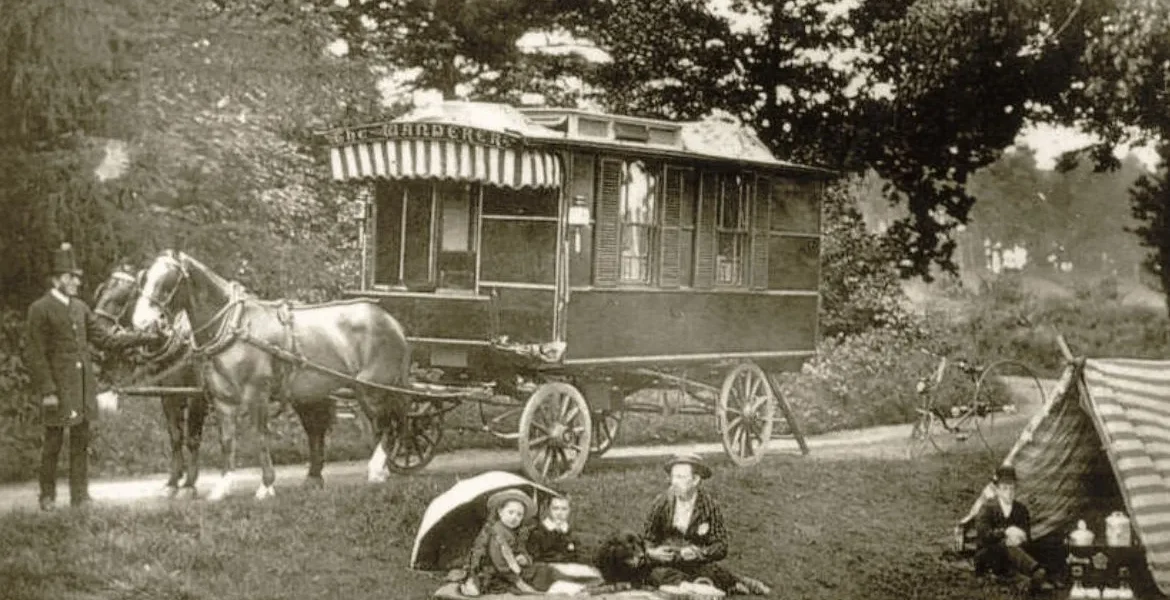
LLong before the camper and caravan, mobile living arrangements already existed, such as Roma caravans (Vardos), fairground wagons, circus carts, and trading wagons. These were intended for living and working while on the road, not for recreation or vacation.
That only really took off later. Before we discuss the camper, let's first look at the origins of the recreational vehicle.
1884 – The First Recreational Wagon
The story begins with Dr. William Gordon Stables, who is travelling through the British countryside by horse and wagon. When he arrives at a Gypsy camp, his horse is startled and, according to Stables, attempts to drive into a fabric shop. Due to minor damage to his wagon, he must wait while repairs are carried out. In the meantime, he is granted permission to view the camp's caravans.
Stables was a former naval doctor and writer, and called himself a born wanderer. He became enormously fascinated by the sight of the caravans. If the dream of an ocean yacht proved unattainable, he thought, then it would be a “land yacht”: a comfortable house on wheels. Soon, he was making sketches of what such a wagon should look like.
A good friend refers him to the Bristol Wagon Company, known for luxury Pullman carriages for the railways. It is there that his famous Land Yacht is eventually built. The Wanderer built and transforms William into a real “Gentleman Gypsy”.
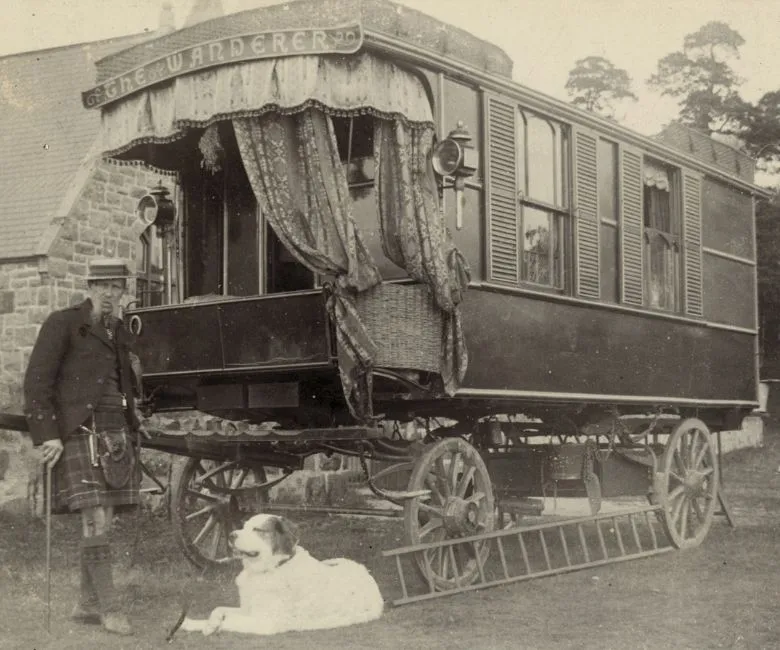
In 1885 he made with The Wanderer A journey of over 2,100 kilometers to Scotland. The wagon is approximately 5.5 meters long, 2 meters wide, over 3 meters high, and weighs about 2 tons. For this, William places an advertisement to hire two strong horses.

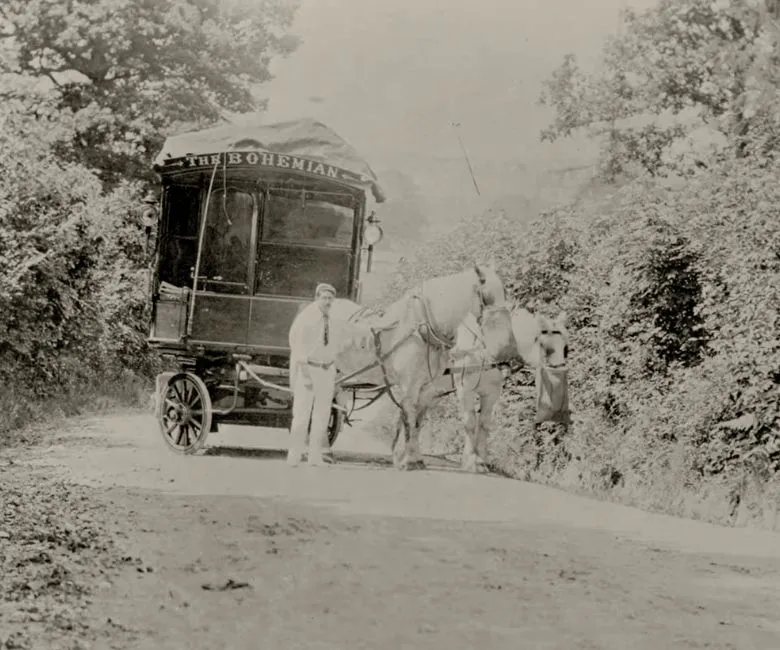
What a beautiful story about the origins of recreational travel with a house on wheels. The Wanderer It cost £300 at the time, converted to approximately 3,500 guilders. During that same period, the Bristol Wagon Company also built The Bohemian, a sister vehicle based on the same sketches. And so leisure caravanning began.
1886 – From Horsepower to HP
The Wanderer was fantastic, of course, but that two tons of mahogany was really heavy for real horsepower.
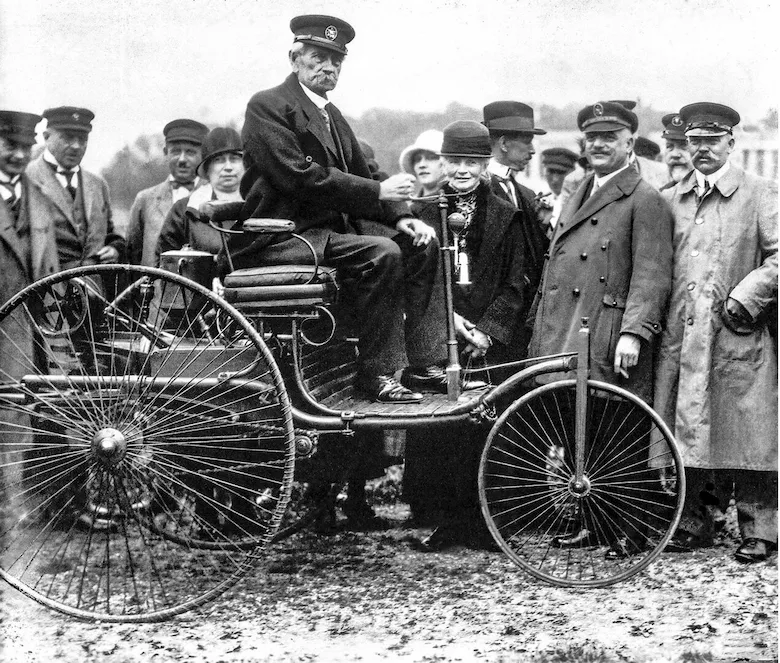
In 1886 – literally one year after William took his Scottish road trip – the German inventor Carl Benz turned the world upside down. He applied for a patent on the very first petrol-powered car: the Benz Patent-Motorwagen. Partly because of this, Carl is widely regarded as the father of the automobile.
This first 'car' didn't have a single horsepower under the hood. It was a fragile three-wheeler that could barely carry two people. If you had bolted William's heavy 'Land Yacht' onto it, the axle would have snapped immediately and the engine would have exploded. So, the road to the camper will have to wait a little longer.
1896 – The Birth of the Truck
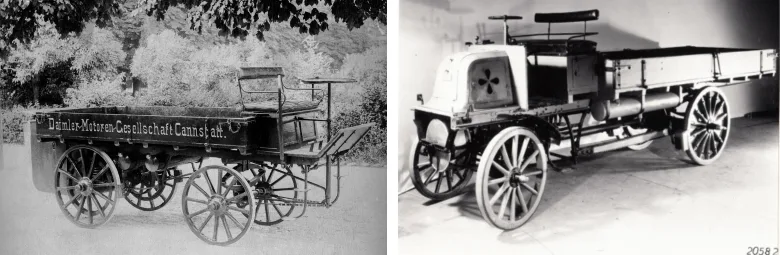
To transport heavier items, more strength was needed. Ten years after his first car Gottlieb Daimler built the very first gasoline truck in 1896.
A wooden cart with an engine in the back that delivered as much as 4 horsepower. That sounds like a lawnmower now, but back then it was a revolution: it could carry 1,500 kilos of cargo.
A few years later (in 1898), Daimler noticed that a rear-mounted engine was impractical for towing heavy loads. Panhard & Levassor had already placed the engine of their passenger cars at the front in 1891. This is how it originated Panhard System: engine in the front, gearbox in the middle, and rear-wheel drive. This proved so superior that the entire world, including Daimler, adopted this concept.
1903 – The Very First Camper
Now you might be thinking: “Ah, so Daimler or Benz built the first camper?” Nope! The two German pioneers were arch-rivals at the time who couldn't stand each other. In fact, they probably never met in person. It wasn't until 1926 that their companies merged to form the famous Mercedes-Benz.
Gottlieb Daimler himself, incidentally, did not live to see that merger; he died as early as 1900 at the age of 65, just before the iconic brand name 'Mercedes' (conceived by a clever Austrian dealer in France and named after his daughter) was even registered.
For the very first time real For the motor camper, we shouldn't go to Germany, then, but to France. The aforementioned French technicians, René Panhard and Émile Levassor, After all, they had bought the official rights to build Daimler engines in France. They took such a rock-solid truck chassis and boosted the engine to a then-bizarre 20 horsepower.
The Basics
And then Jules Sécrestat came into the picture. Jules was an immensely wealthy French liqueur distiller and sportsman from Bordeaux. He wanted to entertain and be able to travel long distances comfortably. He saw the 7-meter-long truck chassis from Panhard & Levassor and thought: “This is my rolling foundation.”
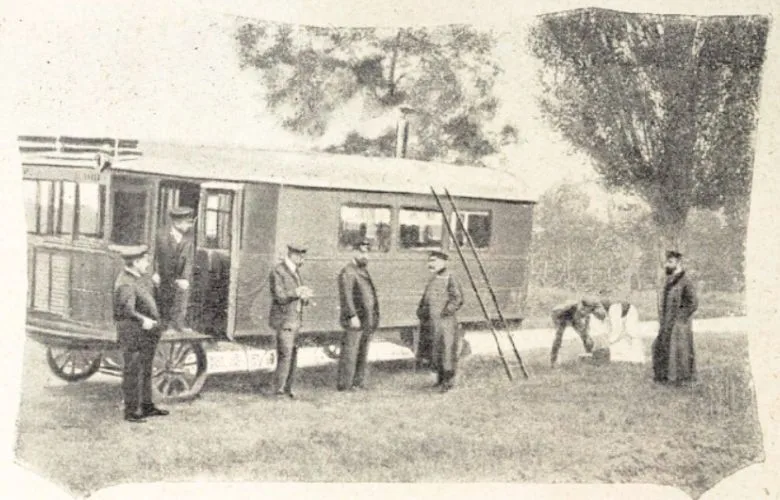
Just like the Wanderer was commissioned and built by the Bristol Wagon Company. Similarly, Sécrestat had it built in 1903 a coachbuilder, Henri Lafitte, placing a complete wooden villa on a Panhard & Levassor chassis.
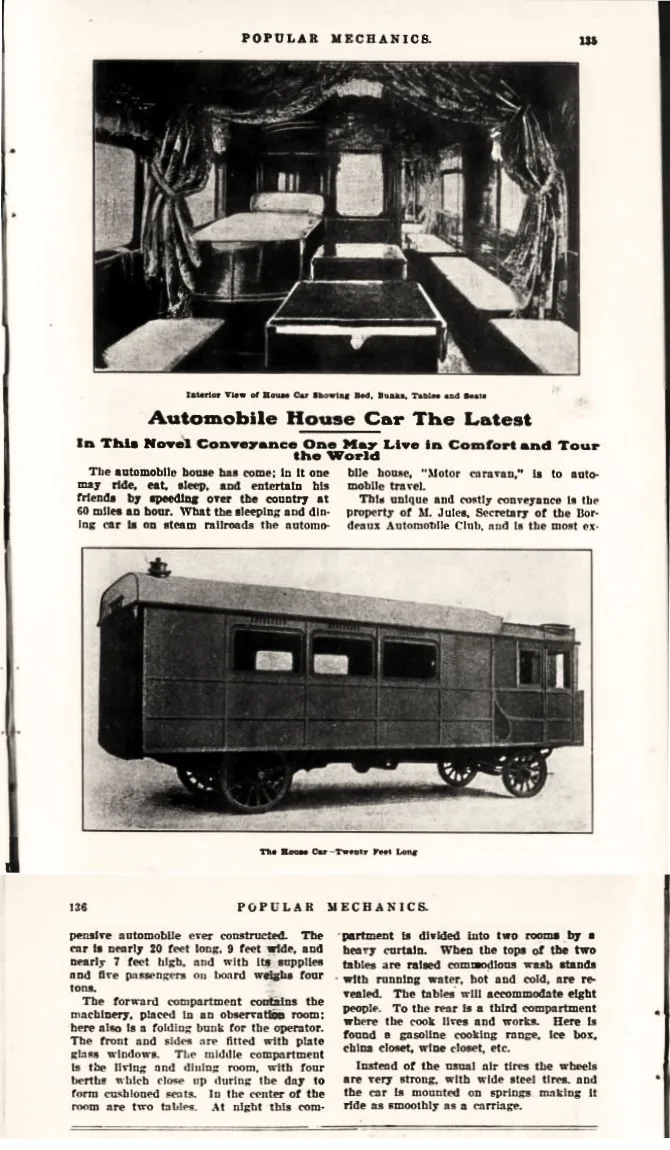
He called him La Bourlinguette. This was the absolute progenitor of the camper. This motorhome had three compartments. At the front was the pilot-mechanic, equipped with a fold-down bed. In the middle was a lounge that could be converted into a bedroom, and at the rear a kitchen where the cook resided. There was running hot and cold water and gas oil for cooking.
With a length of 7 meters, a width of 2.50 meters, and a height of 1.95 meters, it was quite a sight. Because rubber tires could not yet support the weight of 3,500 kg, this very first camper rolled on gigantic wooden wheels with iron hoops.
Historians estimate that this entire project cost around 70,000 to 80,000 French francs in total. Converted to the Dutch currency of the time, that was approximately 35,000 guilders.
1915 – The Blueprint of the Modern Camper
After Jules Sécrestat's French holiday adventure in 1903, we make the great crossing to America. Here, too, a camper was still a purely elite affair. For although the ultra-luxury car manufacturer Pierce-Arrow in 1910 with his Touring Landau Although it is listed in the books as the 'first production camper', it is whispered that only 3 units were built in total. The Touring Landau was, of course, not real camping; it was just a ridiculously expensive car with a tucked-away toilet and sink for a handful of rich people.

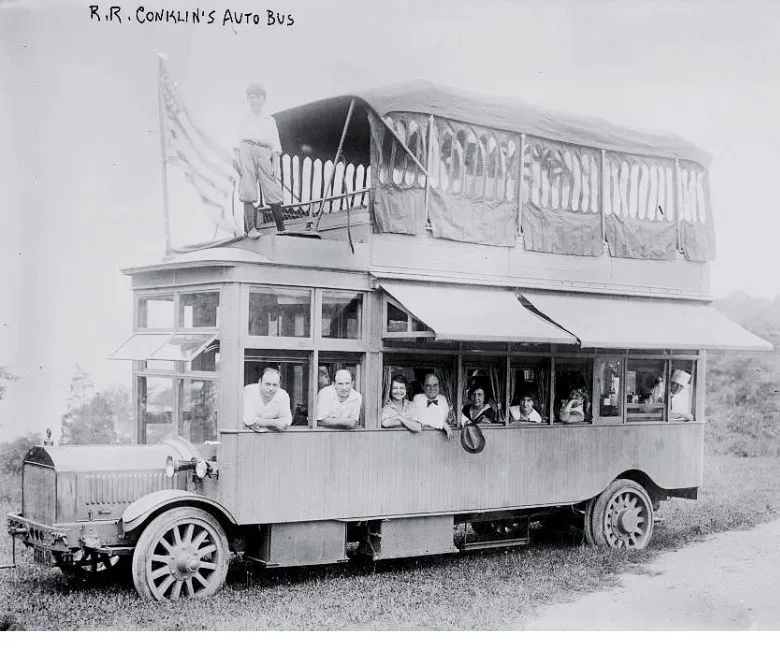
No, in 1915 The American entrepreneur Roland Conklin took a very different, and above all, much bigger, approach. He thought: “When we travel, we do it with the whole family, and in style.”
Conklin had his own bus company. He took his own bus chassis and built an enormous, mobile 'house' on it, no less than 7.5 meters long: the Gypsy Van. This was not a cramped limousine like the Touring Landau, but a genuine one. double-decker camper which weighed no less than 8 tons and accommodated 17 passengers. .
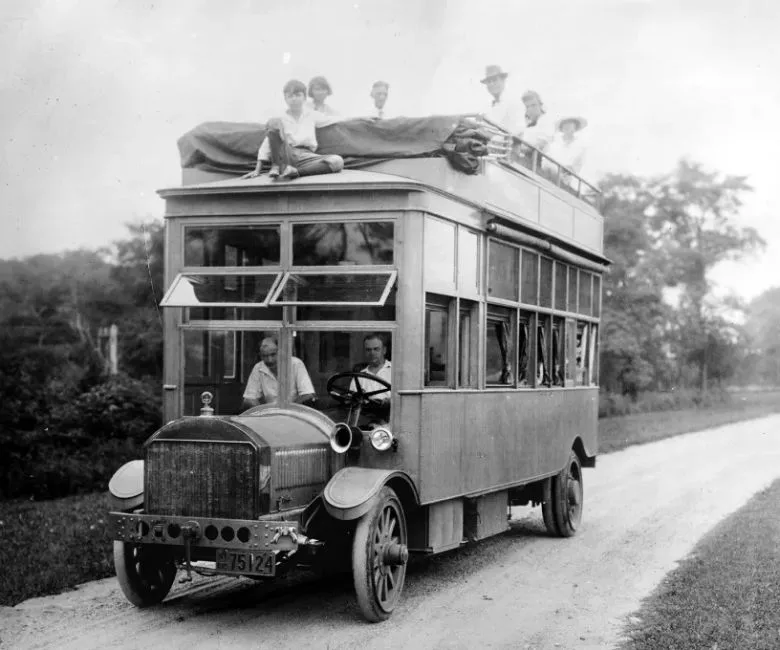
The interior had the luxury of an English villa. The vehicle was equipped with a complete kitchen, Pullman-style sleeping quarters, a phonograph (precursor to the gramophone), and even a roof terrace accessible via a small staircase. It featured, among other things, electricity, cold drinking water, light bulbs, a bath, a shower, a stove, a pantry, and bunk beds.
Business and Social Purpose
To prove what his machine could do, in the summer of 1915 Conklin packed up his entire family for a legendary road trip from New York across America to San Francisco. By driving an 8-ton vehicle through the country, he demonstrated how challenging travel was and put the government 'under pressure' to invest in decent, paved roads.
The two-month journey became a gigantic media sensation. Everywhere the gigantic Gypsy Van when it appeared, thousands of curious Americans flocked to admire this wonder on wheels. In doing so, he proved in a spectacular manner the reliability, power, and engineering of his own chassis and engines.
And he wanted to demonstrate the concept of 'free travel'. He wanted to show that, thanks to modern technology, one could explore untamed America without being dependent on train schedules or hotels.
The Gypsy Van was therefore later officially declared the general blueprint for the generations of campers that would follow.
It is the happiest combination of the main necessities of life: a dwelling-house and a carriage in one.
–Dr. William Gordon Stables (1886)
The icing on the cake
While I am scrutinizing what the 'books' say about who has the first recreational vehicle, car, truck, and camper registered in their name, I receive a beautiful gift.
We were parked with our camper at a tolerated camper site in Lommel (B) when suddenly a heavy, unfamiliar rumbling sound was heard, getting closer and closer. Around me, I saw people already moving around the site with their phones. Naturally, my own curiosity was unstoppable, so I went to take a look too.
A tractor with a trailer drove onto the grounds. And not just any one. It was a beautiful classic with a wooden steering wheel, and behind it a solid wooden, antique recreational vehicle. It looked magnificent, and even the people with a hypermodern camper were impressed.
Meanwhile, I was standing there with my camera as well, and soon I struck up a conversation with the owner. He wasn't entirely sure, but estimated that the combination dated from the 1920s or 1930s. I told him that I was just working on an article about the history of the camper and how amazing it was that they were driving up just then.
Meanwhile, I also struck up a conversation with the lady of the house. She had taken on the task of furnishing the wagon. While we were standing there chatting, her husband came up to me: “Come inside,” he said.
There I stood! I was the only one of all the spectators allowed to take a peek inside and admire the imposing wooden interior.
As it turned out, the owner had found both cars as total wrecks and restored them entirely himself. Absolutely everything was sorted out and restored to the style of the era. It was a huge job sourcing materials and restoring the interior to its historical accuracy.
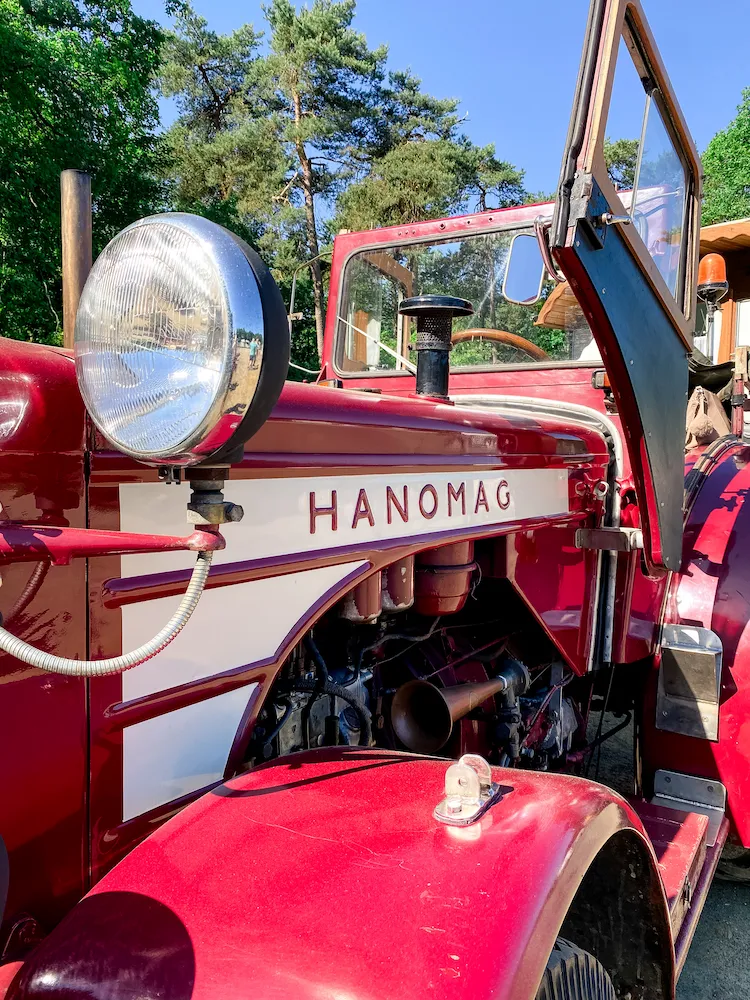

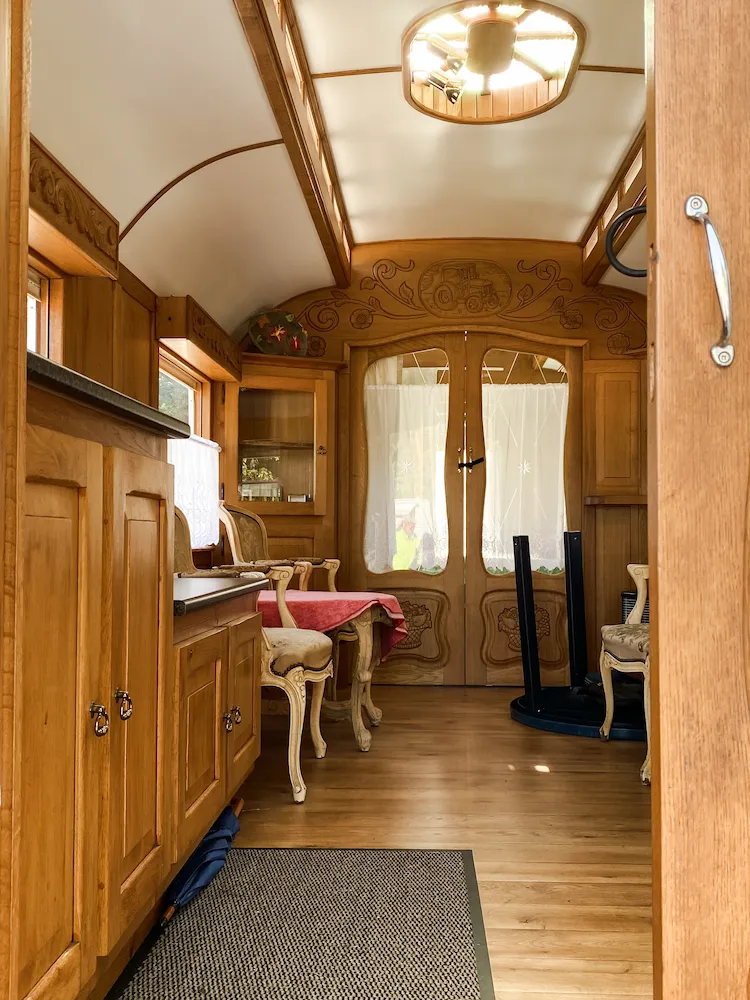
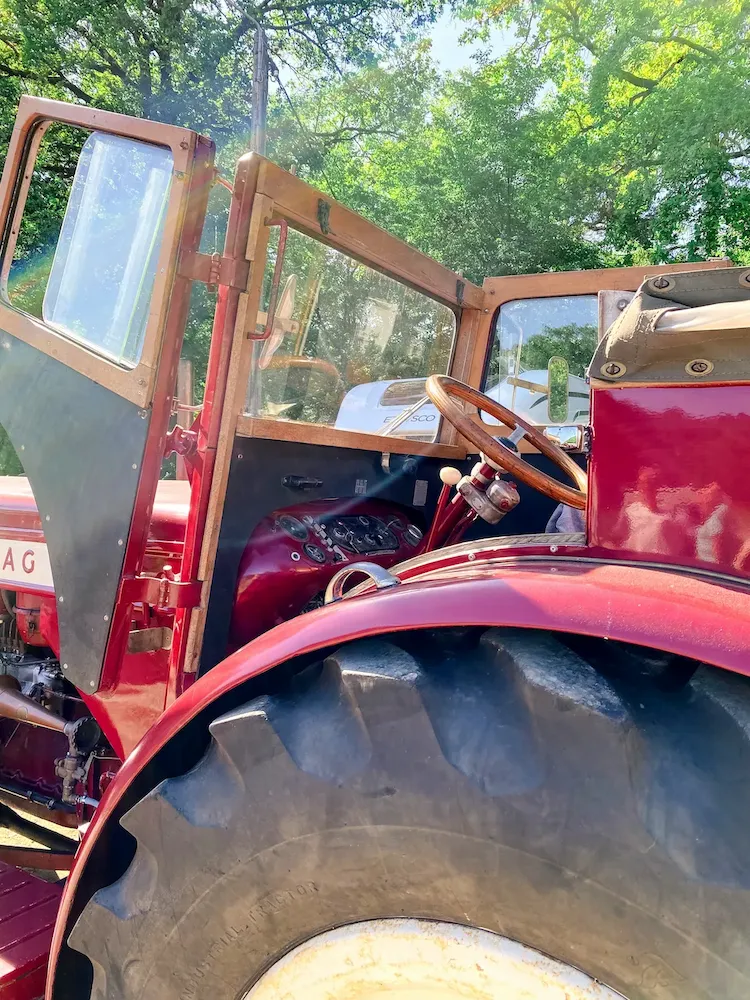

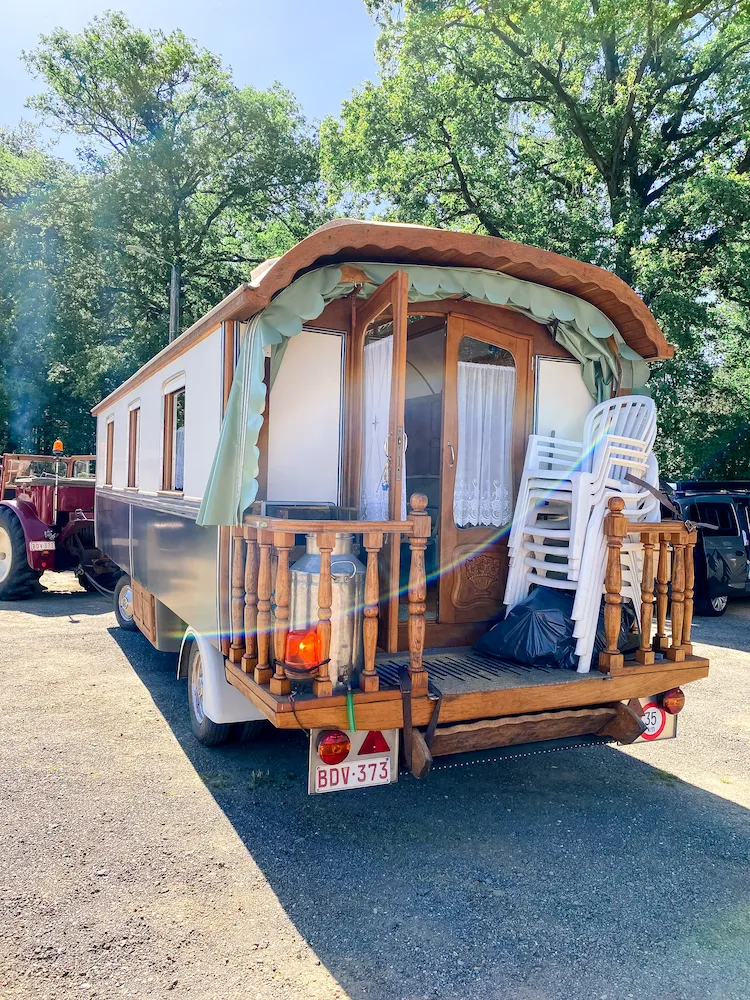
And that hobby wasn't cheap. Before even a single screw was tightened, the tractor and the wagon cost €70,000 and €50,000 respectively in their found condition. Gulp.
The couple comes from Mol (B) and they even occasionally drive it to the Belgian coast. A trip that easily takes them 6 hours in that old Hanomag. But hey, talk about slowing down!
Just like the Wanderer and the Gypsy Van Attracting all the attention in their time, this team attracted now again drawing all eyes towards himself.
What a wonderful cherry on top of this story!
Warm regards,


